
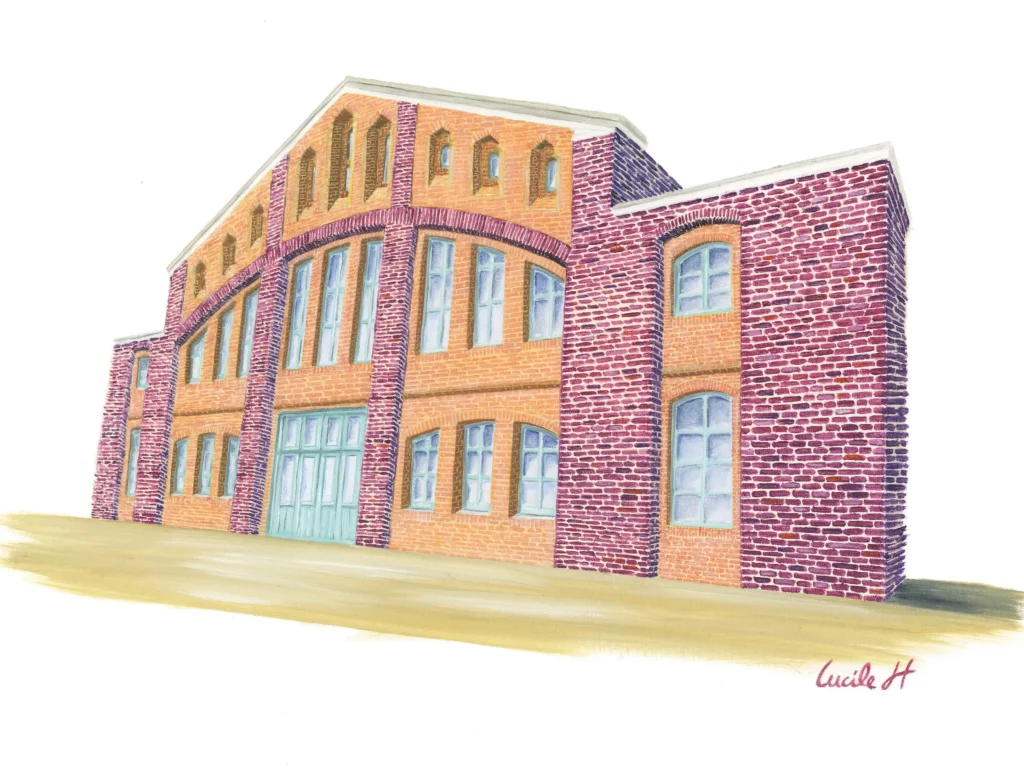
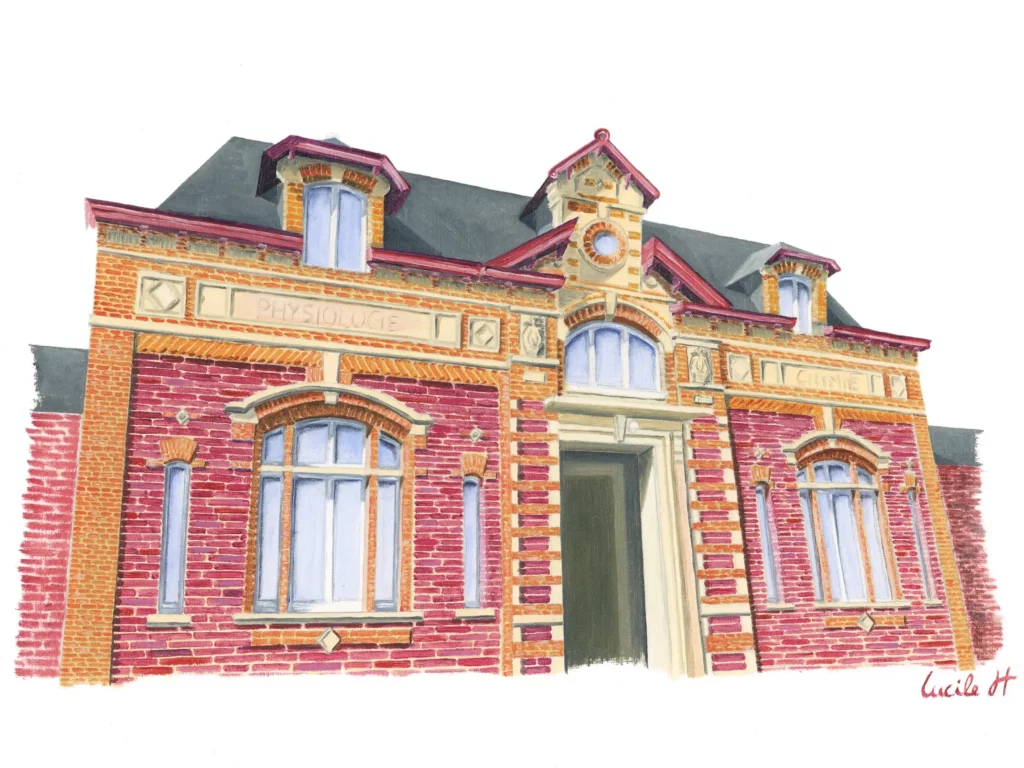
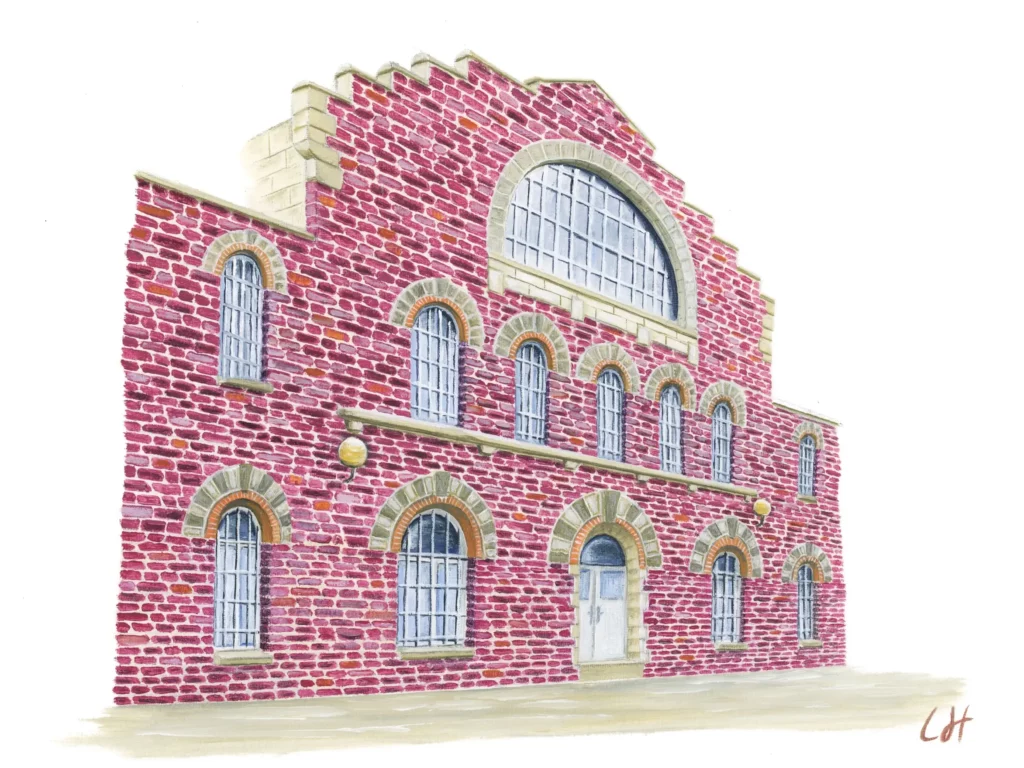
I look at Rennes and see, here and there, a reddish-brown hue, sometimes tinged with purple.
Brick ?
Stone.
Purple.
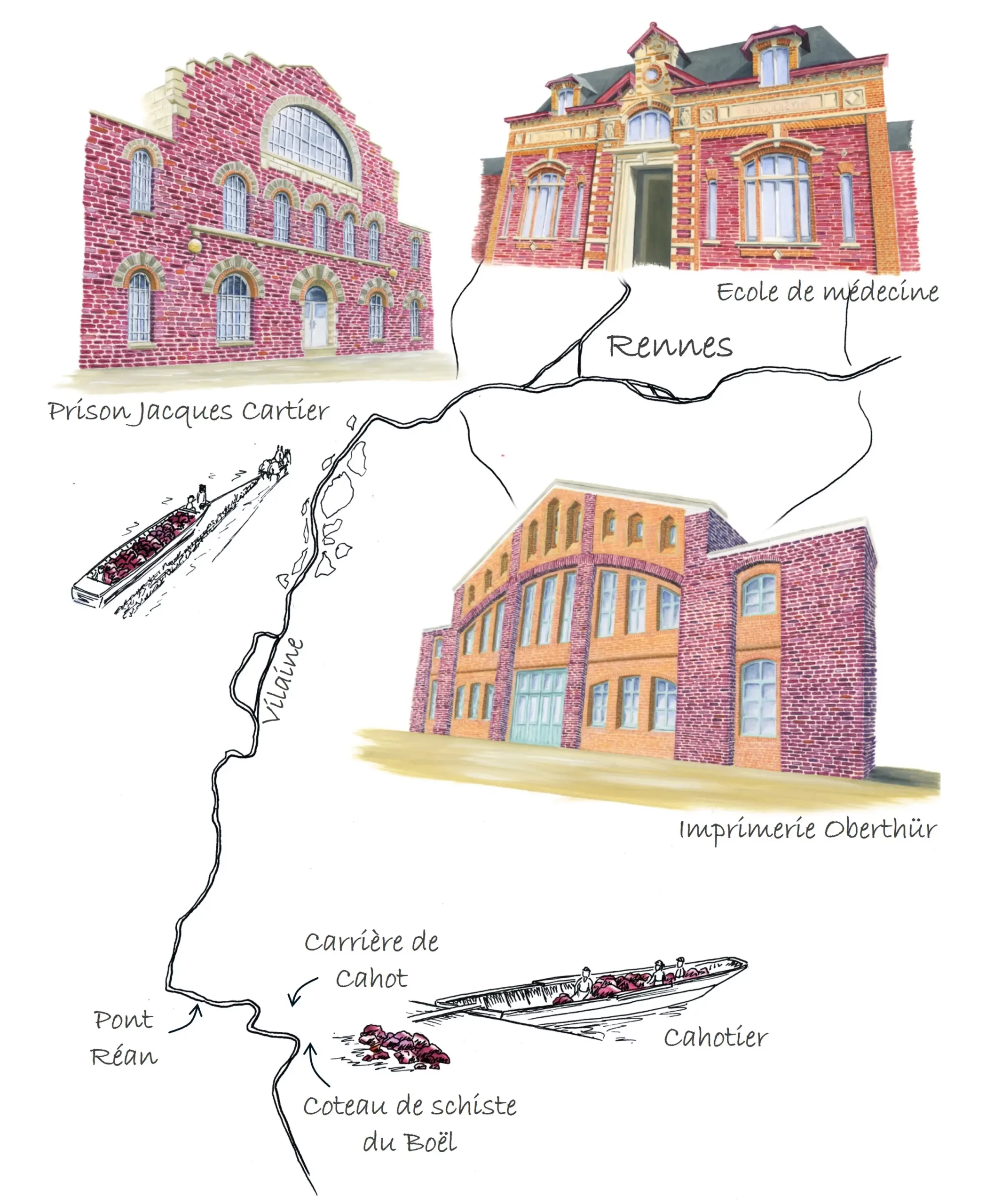
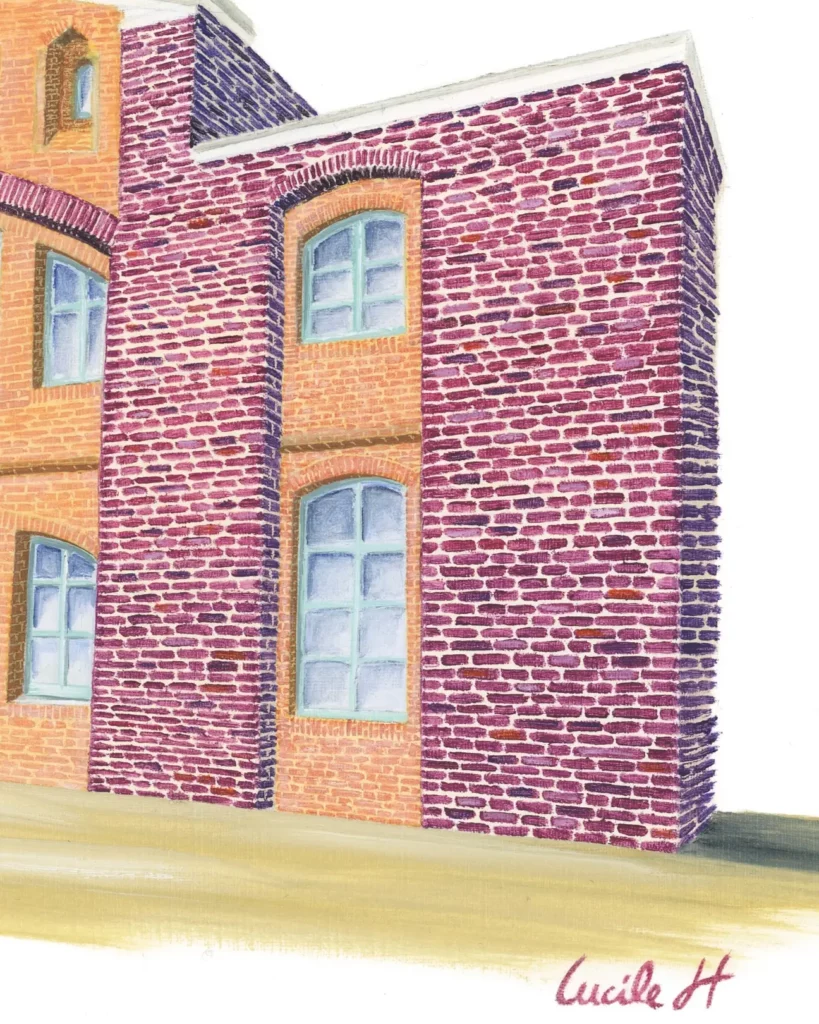
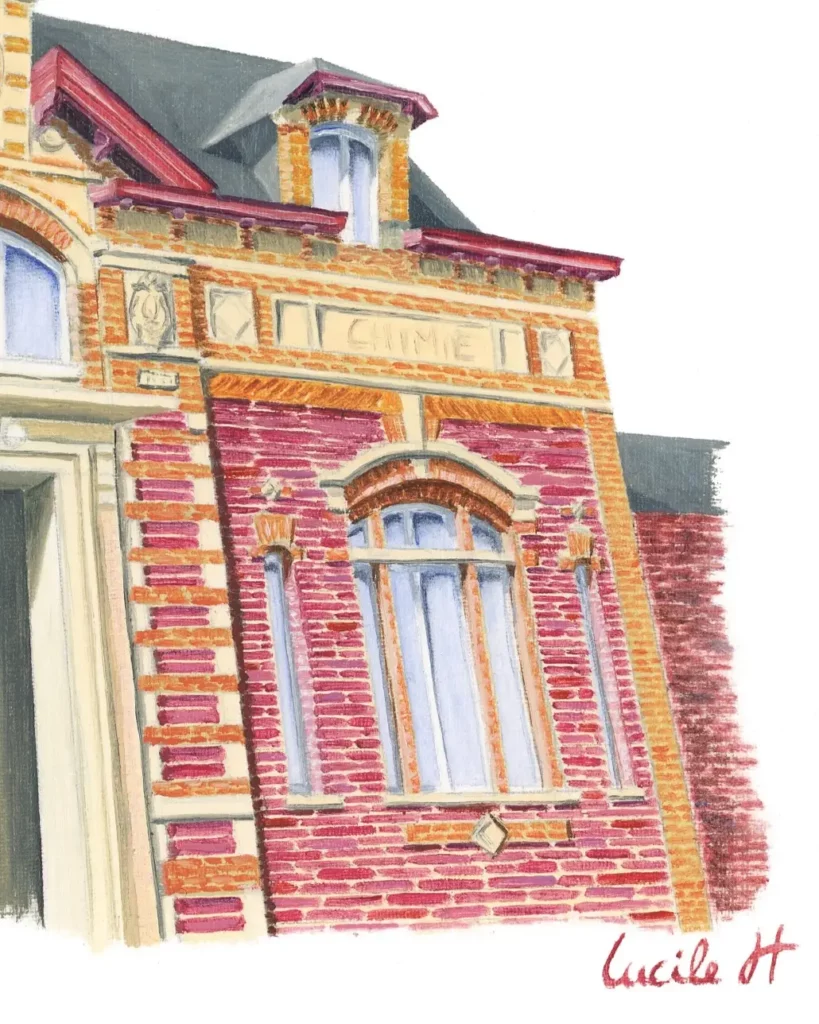
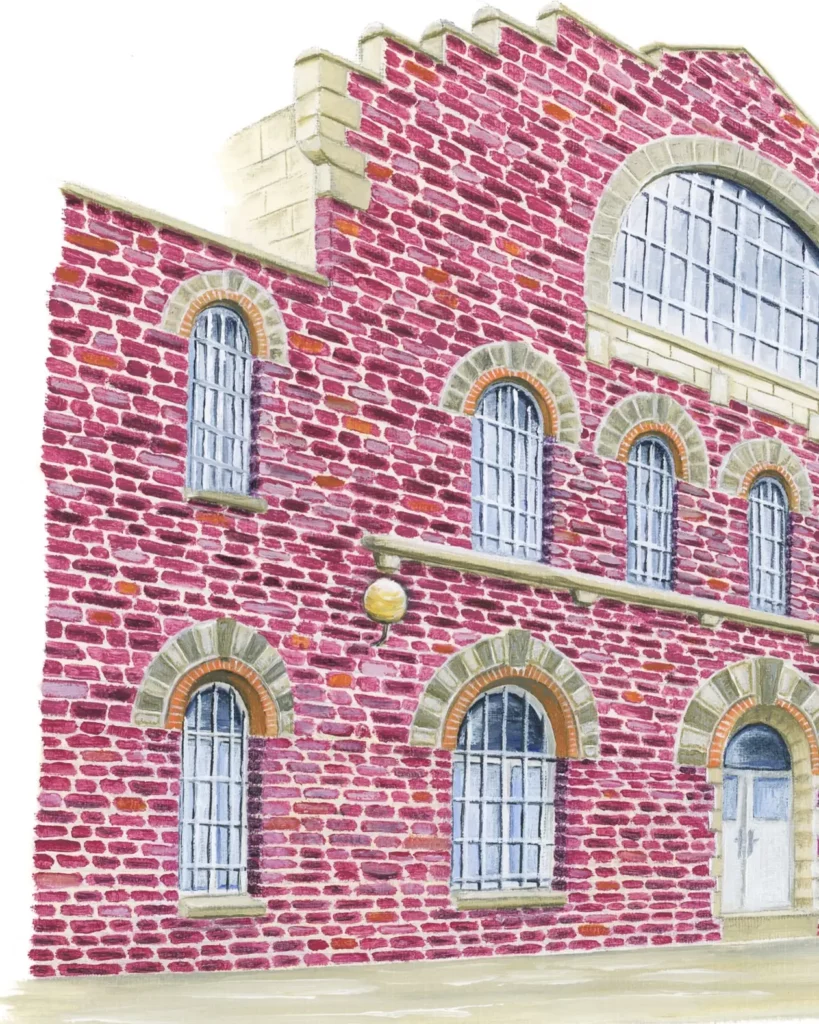
A medical school, a printing works, a prison.
The common thread is colour.
Rennes is known for its half-timbered houses. But it was purple schist that took centre stage in the 19th century. The purple schist of Pont-Réan.
At that time, the demand for cut stone for the city’s construction was high, and only the waterways and the numerous quarries along the Vilaine could meet it.
Specialising in the transport of stone, the ‘cahotiers’ would sail up the Vilaine from the Boël schist hillside to Rennes to supply the city.
The ‘cahotiers’ were the men who used wheelbarrows to load and unload the 50 tonnes carried by their boats.
The ‘cahotiers’ were also the boats themselves – unmotorised vessels designed for transporting stone, capable of mooring perpendicular to the bank, thereby facilitating loading and unloading.
One can thus imagine the river connecting the city to its surrounding countryside, nourishing and irrigating it.
Colour tells us where the city comes from.
Where do its materials come from ?
Who brought them here ?
To which territory is it connected ?
Colour tells us our story
We must look at it
We must listen to it
All around you, what colour is the city ?
Make the most of the holidays to have a look.
Happy summer to you
Lucile